How Yoga Props Can Support or Challenge Your Practice
This week in my yoga classes I noticed something quite interesting when it comes to props — they can be a tool for support or one for challenge. I’m still rehabbing a knee/hip injury, and sitting on the floor cross-legged is extremely uncomfortable, so I’m using the most easily available prop of all — a chair.
Adding the chair into my practice has transformed it from something that was inducing intense pain to something I can feel completely relaxed in. My nervous system certainly knows the difference.
I mixed things up this week, though, and invited students to use a strap to change the feeling of wide-legged forward folds and side stretches. It’s amazing how much more challenging it is to do these poses when you have straight arms and a strap to hold. I felt it in my body (in a good way) for days after my classes.
Two instances of prop use, two different responses.
After years of teaching yoga, I have found that prop use is polarising for my students too. Some students love using props as much as I love using my chair, and others not so much. I’ve even had a student say, “oh yuck” when I offered her a prop.
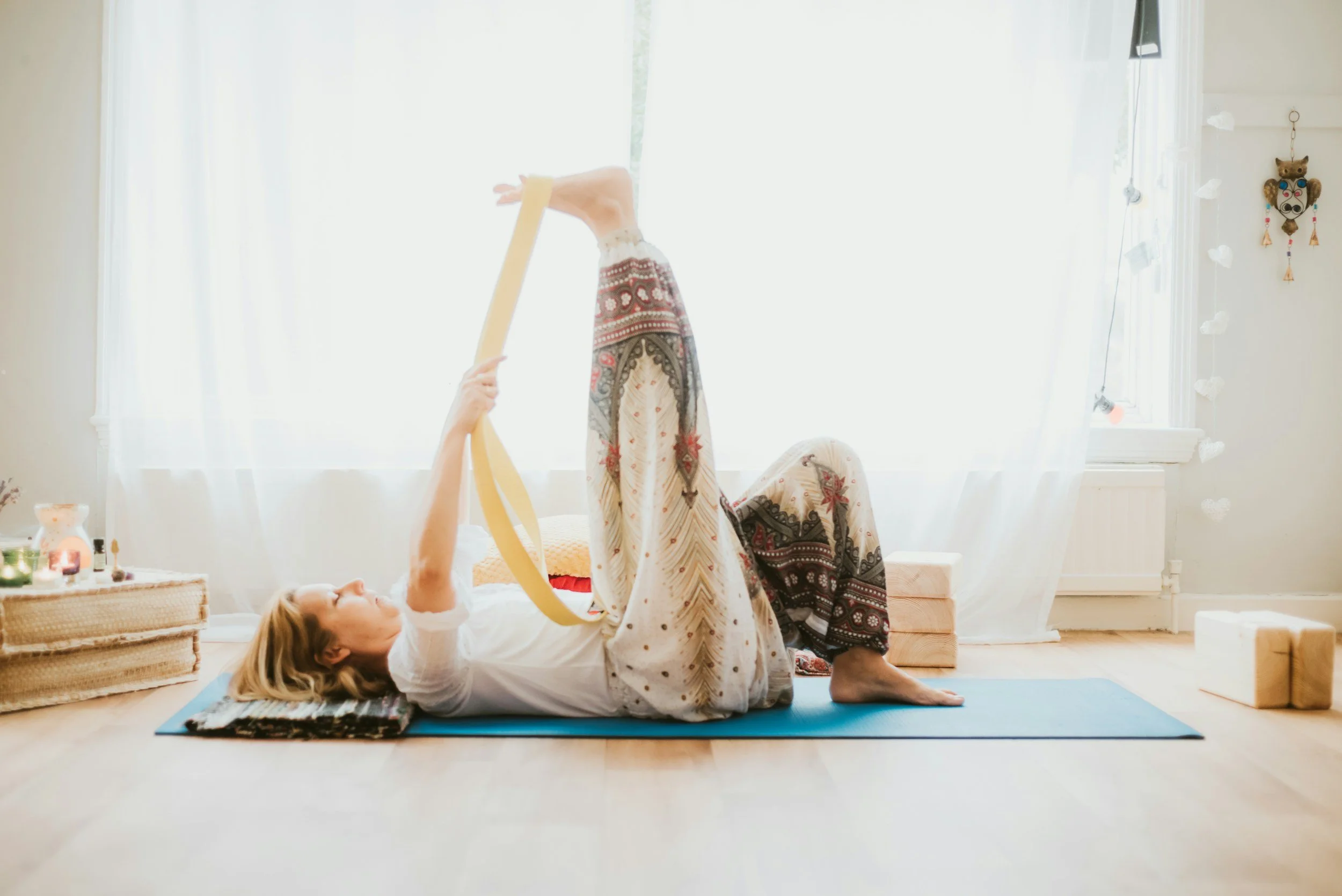
Yoga props started becoming popular when teachers could see the benefits of supporting their own bodies when recovering from illness or injury. Through experimentation, they also saw how props can help students move into deeper poses with better alignment.
These examples are the essence of prop use in a yoga class. Sometimes we want the ease that a prop can provide. Sometimes we want to be challenged, and of course, the third option — practising yoga with just your body — is valid too.
Every pose, breath, and prop in my classes is an offering, a choice, and I hope that my students always feel empowered enough to choose what’s right for them, even if that changes from class to class.