
Strength training for a midlife body in recovery
When pain doesn’t mean stop and strength training can help
One of the biggest shifts I’m working with right now is this: pain doesn’t automatically mean stop moving.
Most of us have been taught that if something hurts, we should rest until it’s completely gone. But with things like hip tendinopathy and knee pain - things that happen a lot in midlife - that approach can sometimes keep you stuck in the same cycle for months (or longer).
Getting stronger with strength training can make a huge difference to pain levels.
Strong muscles change everything
Muscles support joints. When they’re stronger and doing their job well, they reduce the load on irritated tissues like tendons. So instead of stopping exercise all together, it’s important to find ways to get strong without pain. And that usually means smarter movement, a very different starting point.
Getting guidance for strength training matters
I’ve been working with a physio for support through this, because honestly, it’s not something I’d want to guess my way through. What’s been helpful is having a plan that’s specific to my body — not generic, not “just rest it,” but actual targeted strength work for each side. My left leg and right leg are not being treated the same. And that alone has been a big learning.
The shift: reps don’t have to be rigid
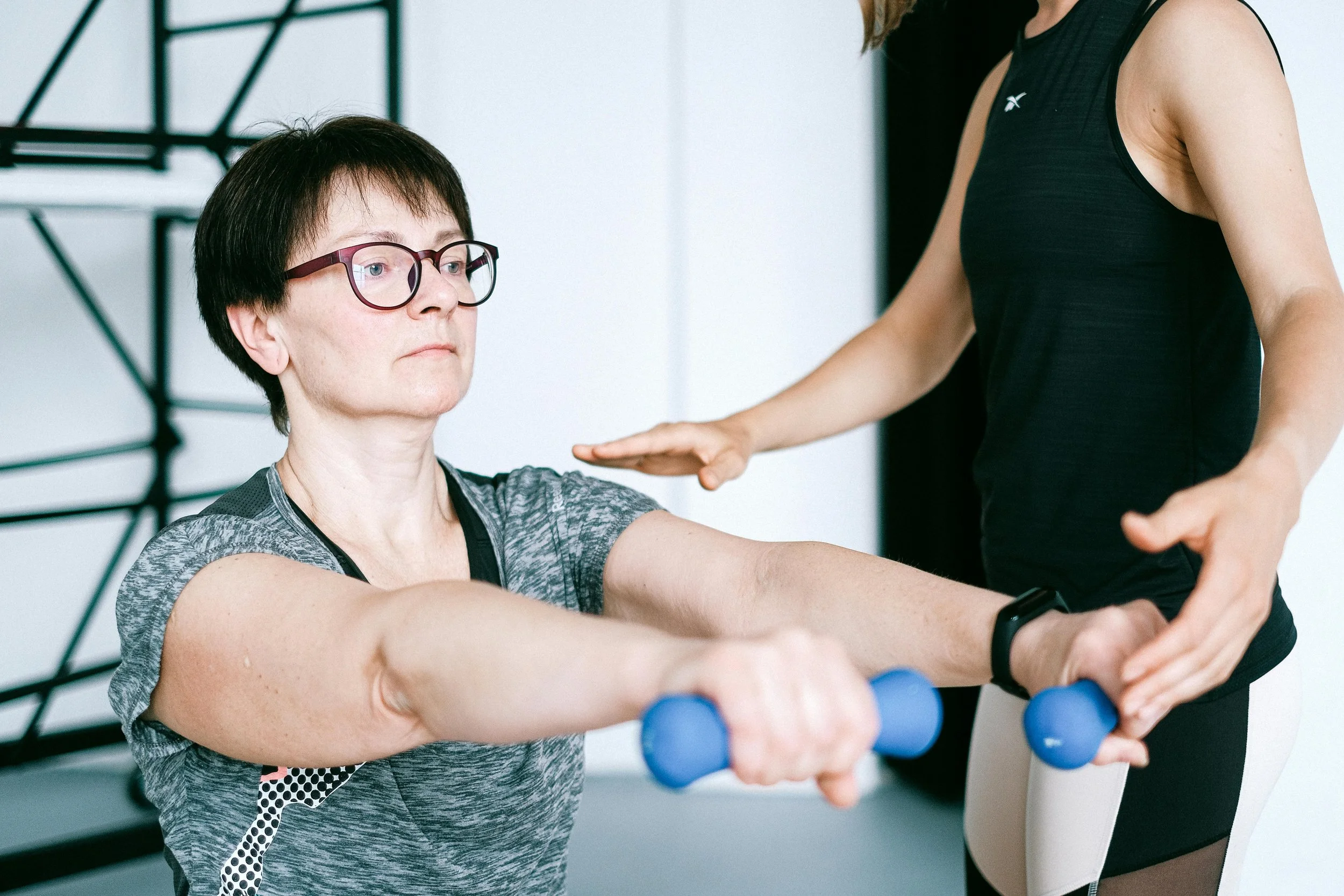
I used to think strength training meant hitting a fixed number of reps no matter what. Push through, finish the set, move on. And then my body felt awful so I wouldn’t do it again.
Now I’m working with something different: fatigue, not punishment.
Some days that looks like doing 12 reps. Some days it’s 8. The number changes, but the intention doesn’t — I’m working the muscle enough to create adaptation, without tipping into flare-up.
Pain vs effort
One of the most useful things I’ve learned is the difference between:
muscle effort / fatigue
and pain that doesn’t feel right
They are not the same thing. Strength work should feel like effort. It shouldn’t feel like sharp or escalating pain.
A quick note on different types of pain
It’s also worth saying that not all pain behaves the same way.
Some pain responds well to graded loading and strength work. Other types of pain — including certain pelvic pain presentations, acute injury, or pain with an unclear cause — may need a very different approach, including rest, down-regulation, and medical or specialist input first.
This is why individual assessment matters so much. The goal is never to “push through everything,” but to match the approach to what your body actually needs.
Yoga taught me more than I expected
My yoga practice has helped me with this in a way I didn’t expect. It’s made me more aware of sensation, compensation, and how I’m actually moving. That awareness has made strength training feel less like “pushing through” and more like listening while working.
The change has been real
After a couple of weeks of consistent, guided strength work, I’ve noticed a clear reduction in pain — around 60%. Not perfect. But enough to know I’m moving in the right direction.
The takeaway
If there’s one thing I’d emphasise, it’s this: Waiting for pain to disappear completely before rebuilding strength can actually slow things down.
A better approach is usually:
start where your body is at
build gradually
adjust based on how your body is responding
and work with someone who can guide you properly
For me, having physio support has made a huge difference in turning this from guesswork into something structured and sustainable.
I know how much difference it makes finding a physio who actually listens and understands midlife bodies. If you’ve got someone you’d recommend, feel free to share them in the comments.