The Soft Start
Body Tenderness
One Mighty Powerful Yoga Pose - Legs Up The Wall
For many of us, being “with” the body has historically meant effort. Working up a sweat. Pushing further. Doing something to earn rest.
So it’s no surprise that movement can start to feel punishing — especially if your body has changed, slowed, or become more sensitive over time.
Body tenderness asks a different question: What if being with your body could feel supportive instead of corrective?
Today’s practice is a simple example of that.
Legs up the wall is not a workout. It’s not something you need to get better at. It’s a way of letting your body be held.
This shape gently reverses gravity. It supports circulation, eases pressure in the legs and lower back, and encourages the body to shift out of “doing” and into resting.
Physiologically, it can help with:
tired or heavy legs
gentle lymphatic flow
softening the breath
easing tension in the lower body
plus it calms the nervous system so helps to reduce the stress response
Mentally and emotionally, it offers something just as important:
a sense of pause
a moment of being supported rather than supporting everything else
permission to rest without earning it
There is nothing dramatic about this practice — and that’s the point. This is tenderness, not transformation.
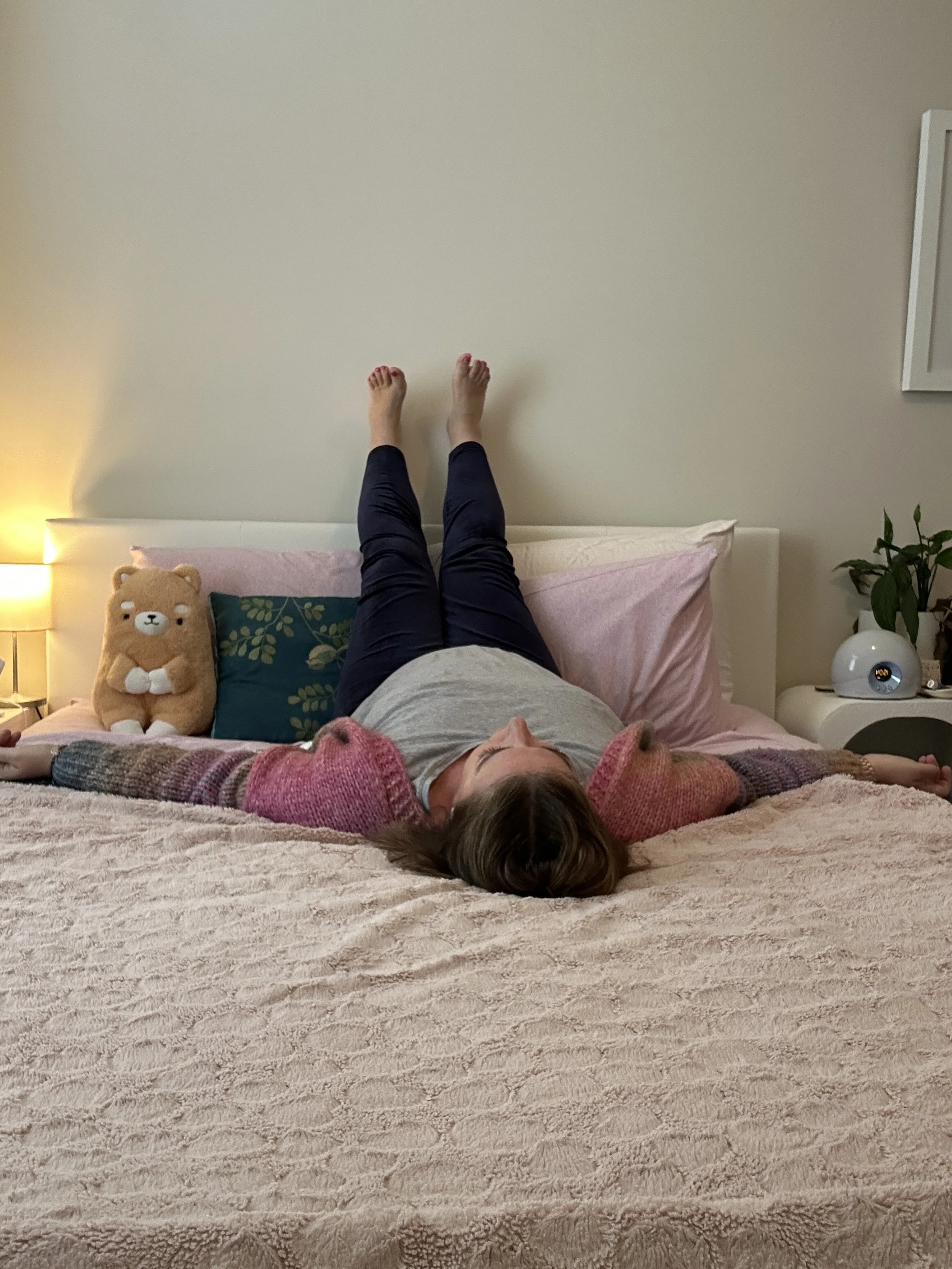
Today’s Practice: Legs Up the Wall
You can do this against a wall, a couch, a bed, or using a chair.
Sit with one side of your body close to the wall or support
Gently roll onto your back as you lift your legs up
Let your arms rest wherever feels comfortable
Options & modifications:
Bend your knees slightly if your hamstrings feel tight
Place a cushion or bolster under your hips for support
Rest your legs on a chair or bed instead of straight up the wall
Stay for 2 minutes or 15 — there’s no “right” amount of time
If at any point it doesn’t feel good, you can come out. Listening to your body is part of the practice.
Today’s Reflection:
After you rest, take a few moments to reflect:
What has movement meant to me in the past?
When has it felt nourishing, and when has it felt punishing?
What kinds of movement help me feel more like myself — not better, fitter or stronger, just more present?
You might journal, think quietly, or simply notice what lingers in your body.